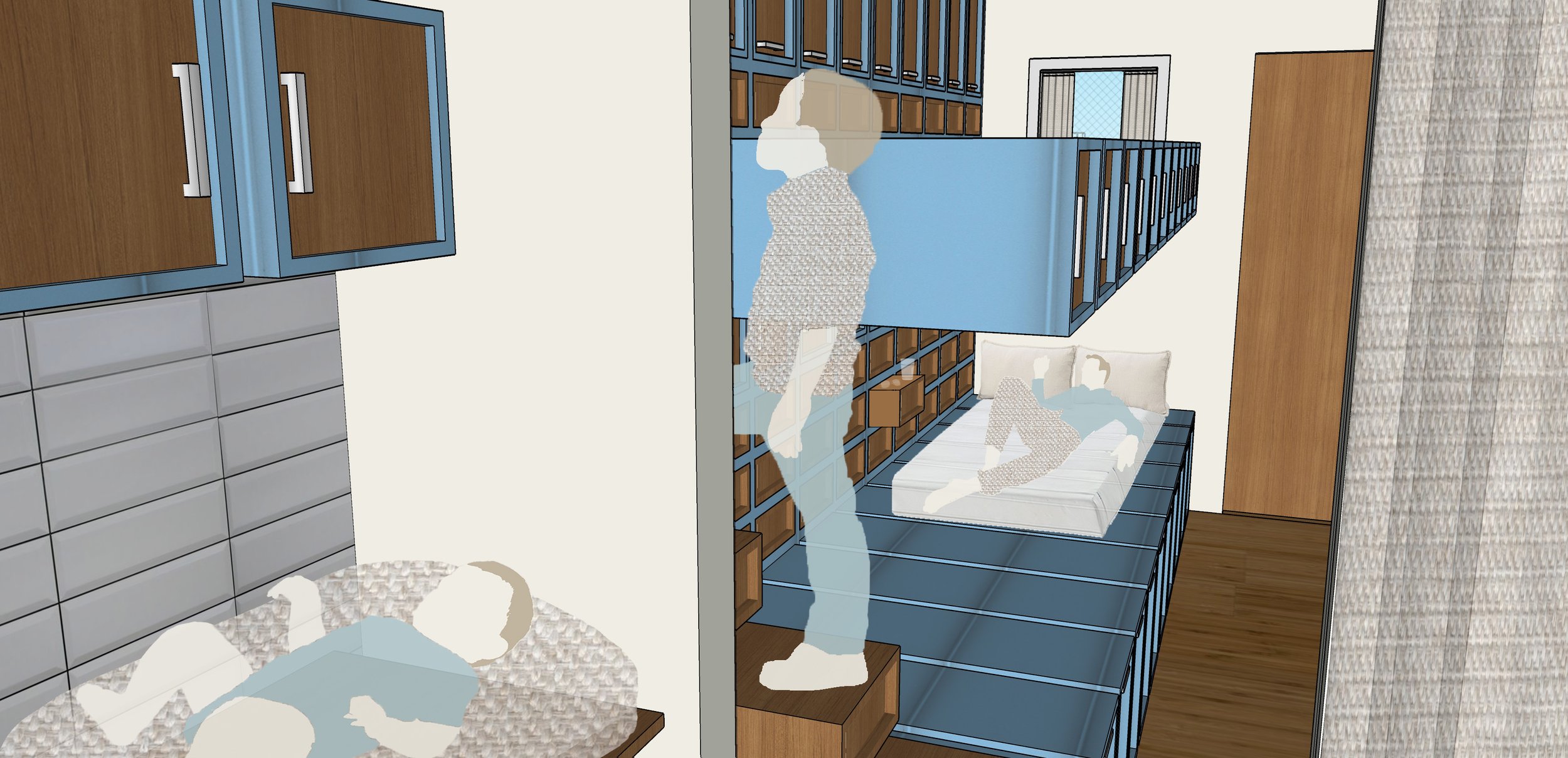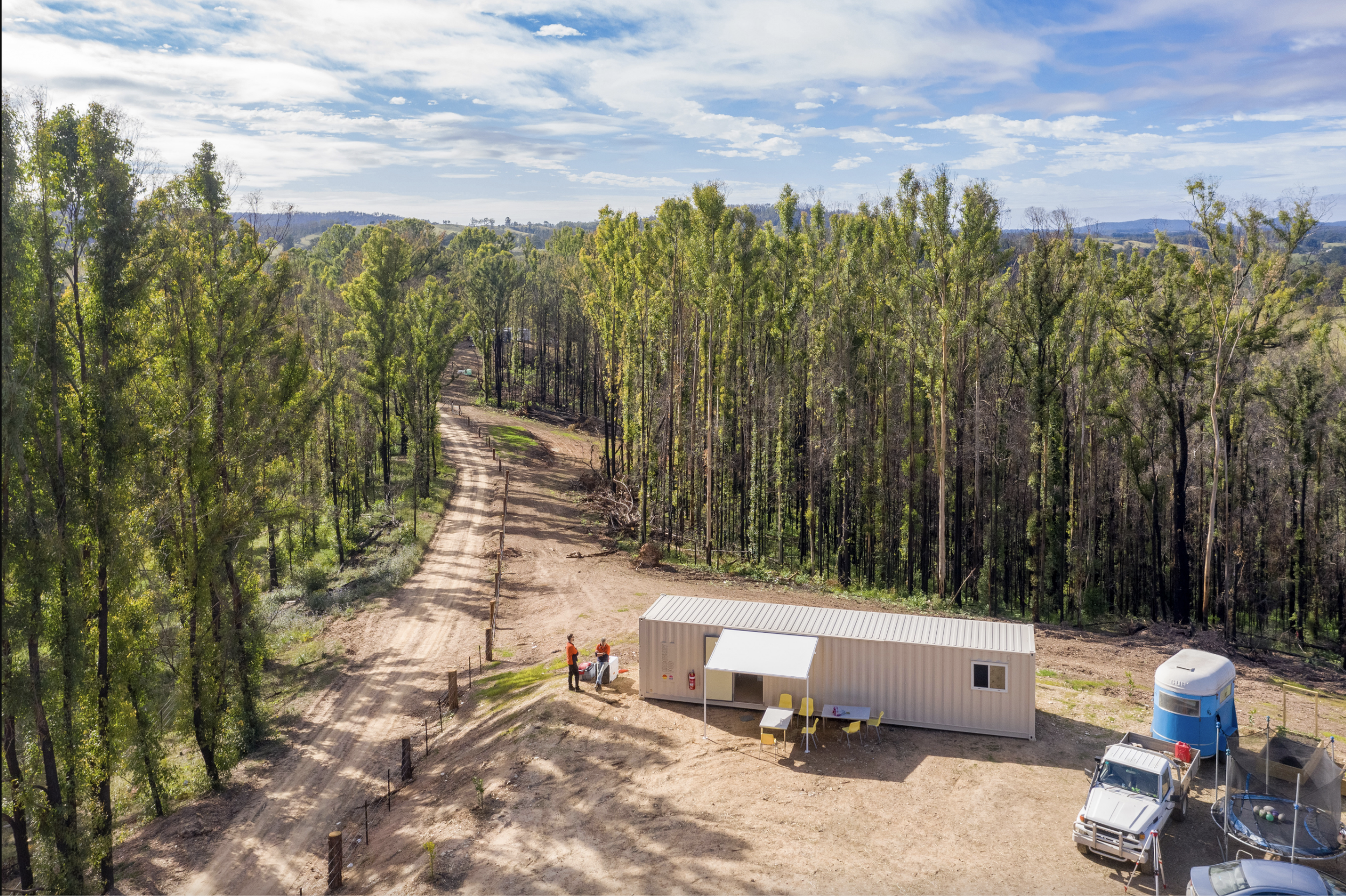
Aiming to improve upon the temporary housing provided for victims of Australia’s bushfires, this proposal integrates a custom system to allow for a space that provides flexible functionality. Since the design is intended for short-term and includes an ever-changing feature, I named the project ‘Temporarily Transitional’.
Capstone
Class
INTD5002
Type
Single-family
DISASTER
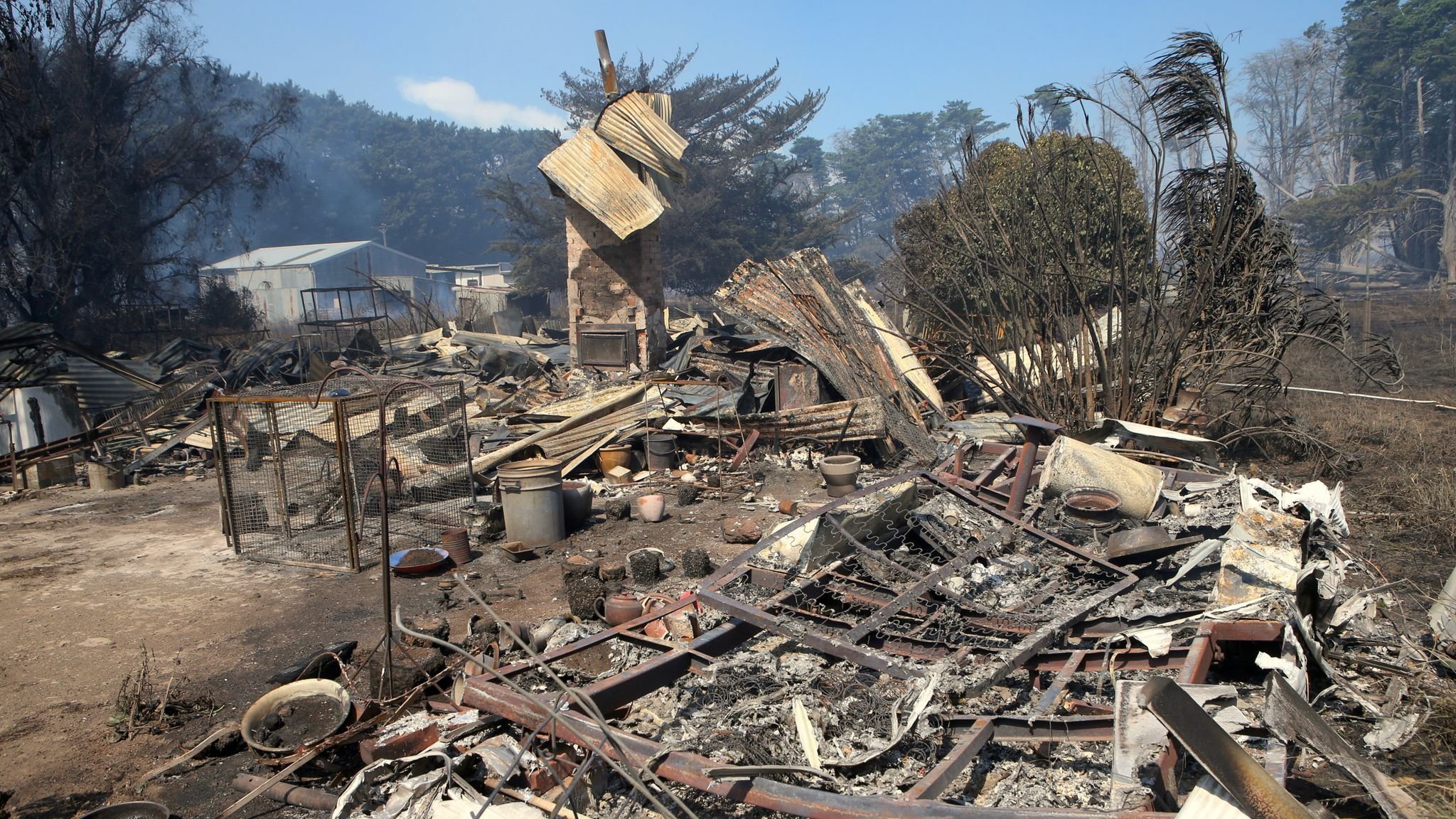
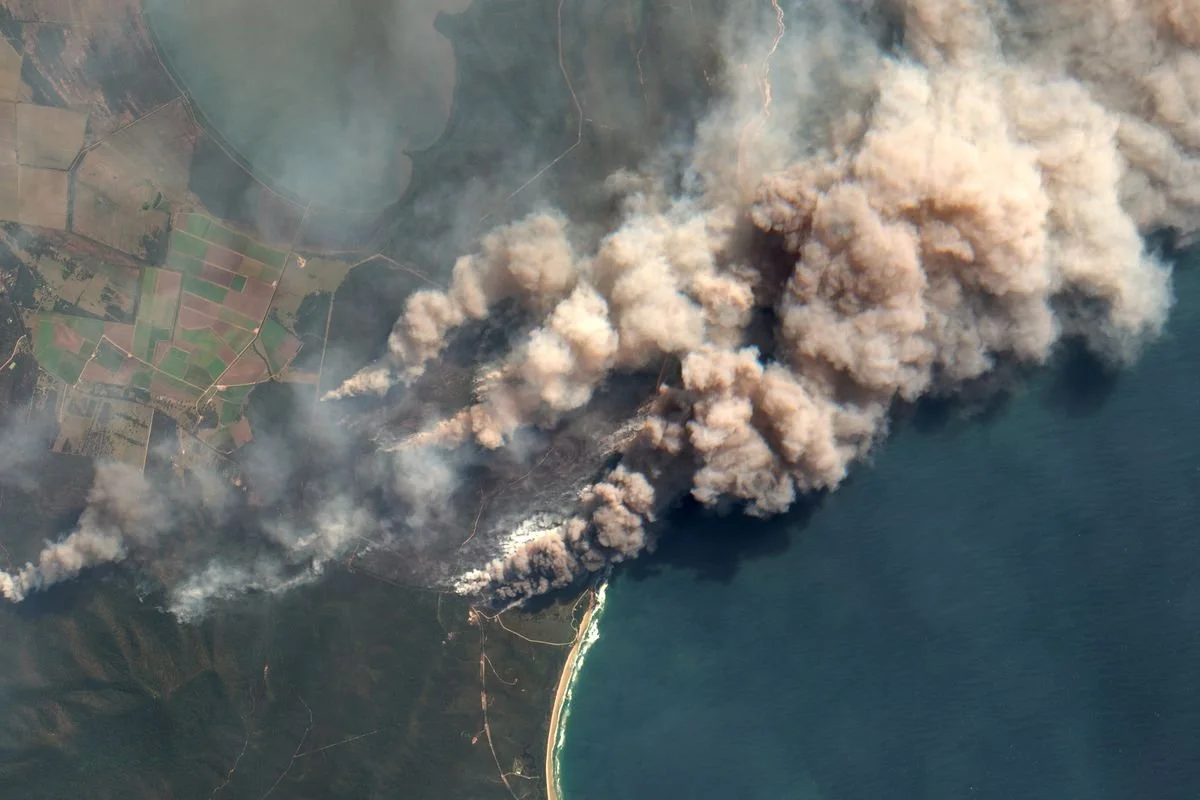
Australia’s increasing bushfire seasons, intensified by climate change, displace families and devastate ecosystems. While flames dominate public perception, smoke inhalation is the primary cause of post-fire fatalities, creating long-term health risks even after fires subside.
DISPLACEMENT
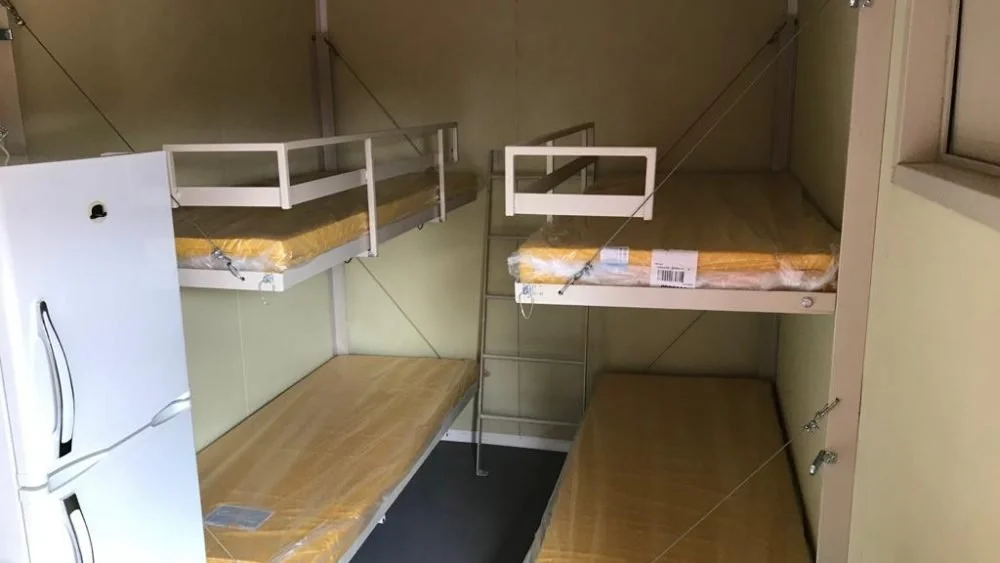
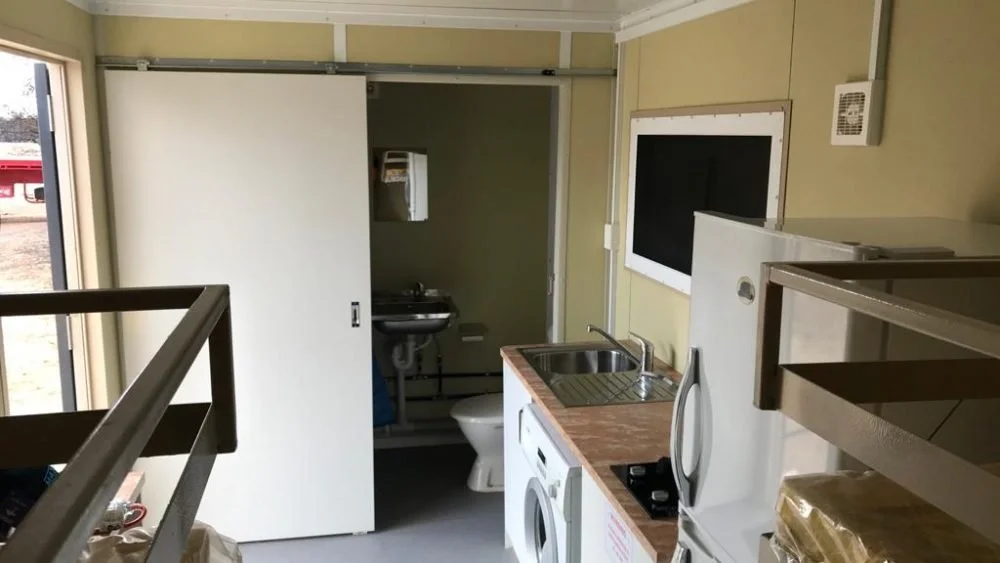
Temporary housing pods currently deployed after bushfires provide essential utilities but fall short in comfort, flexibility, and livability. Limited storage, poor lighting, and rigid layouts make long-term occupation difficult, especially for families rebuilding their lives over months or years.
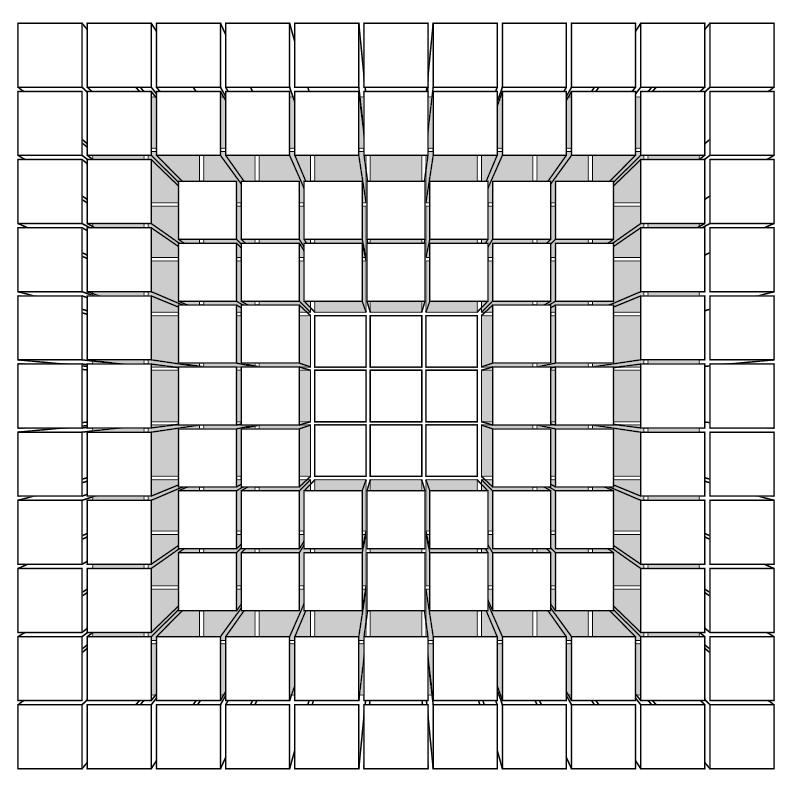
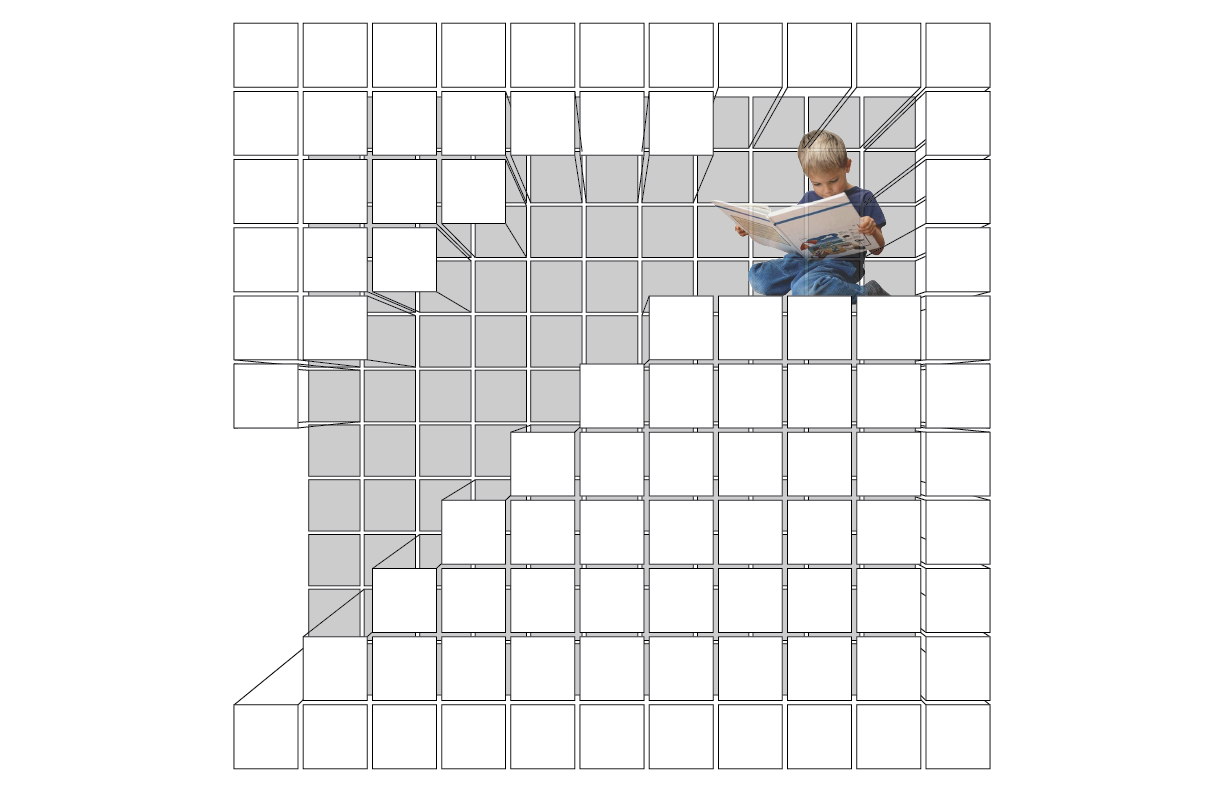
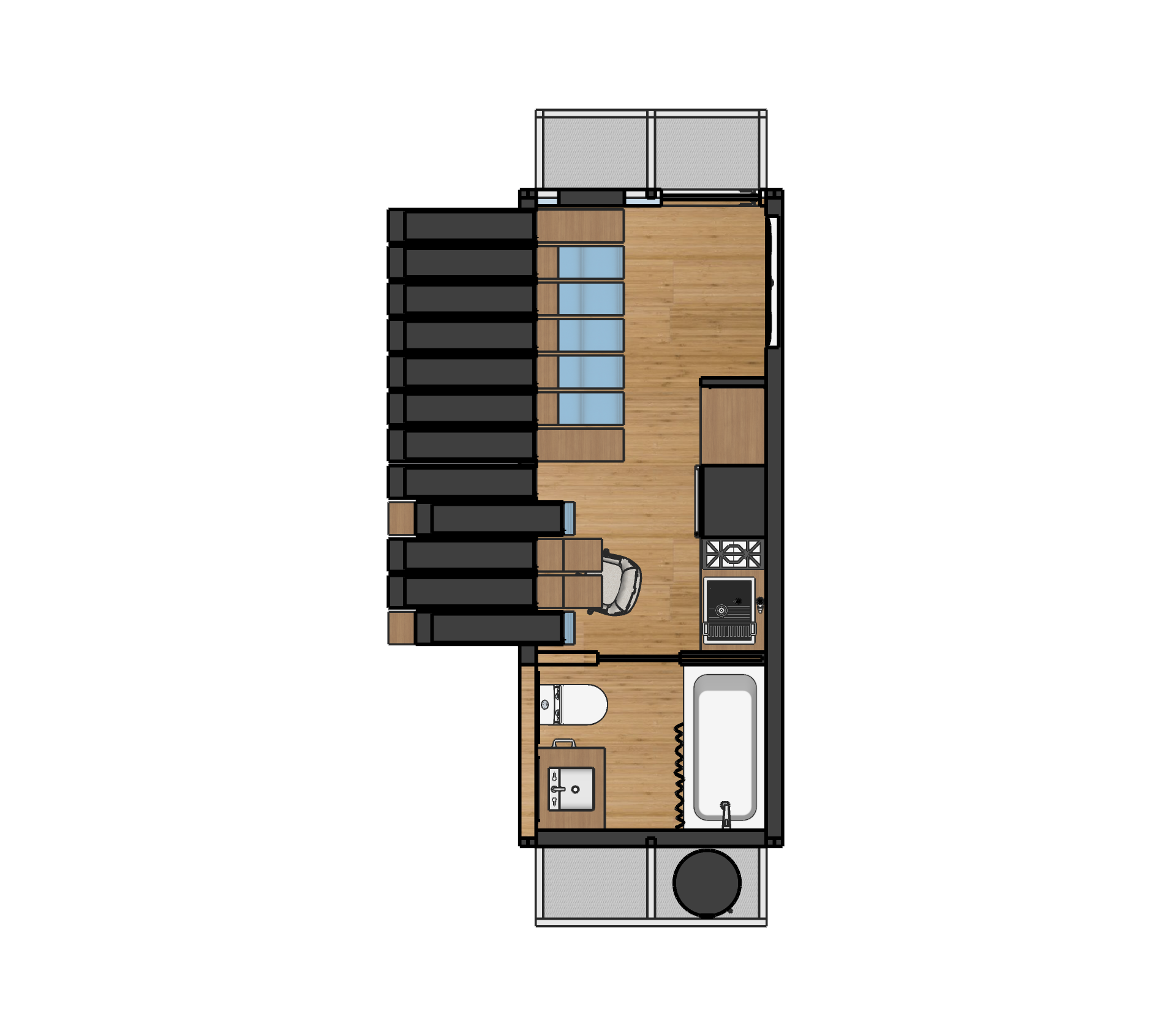
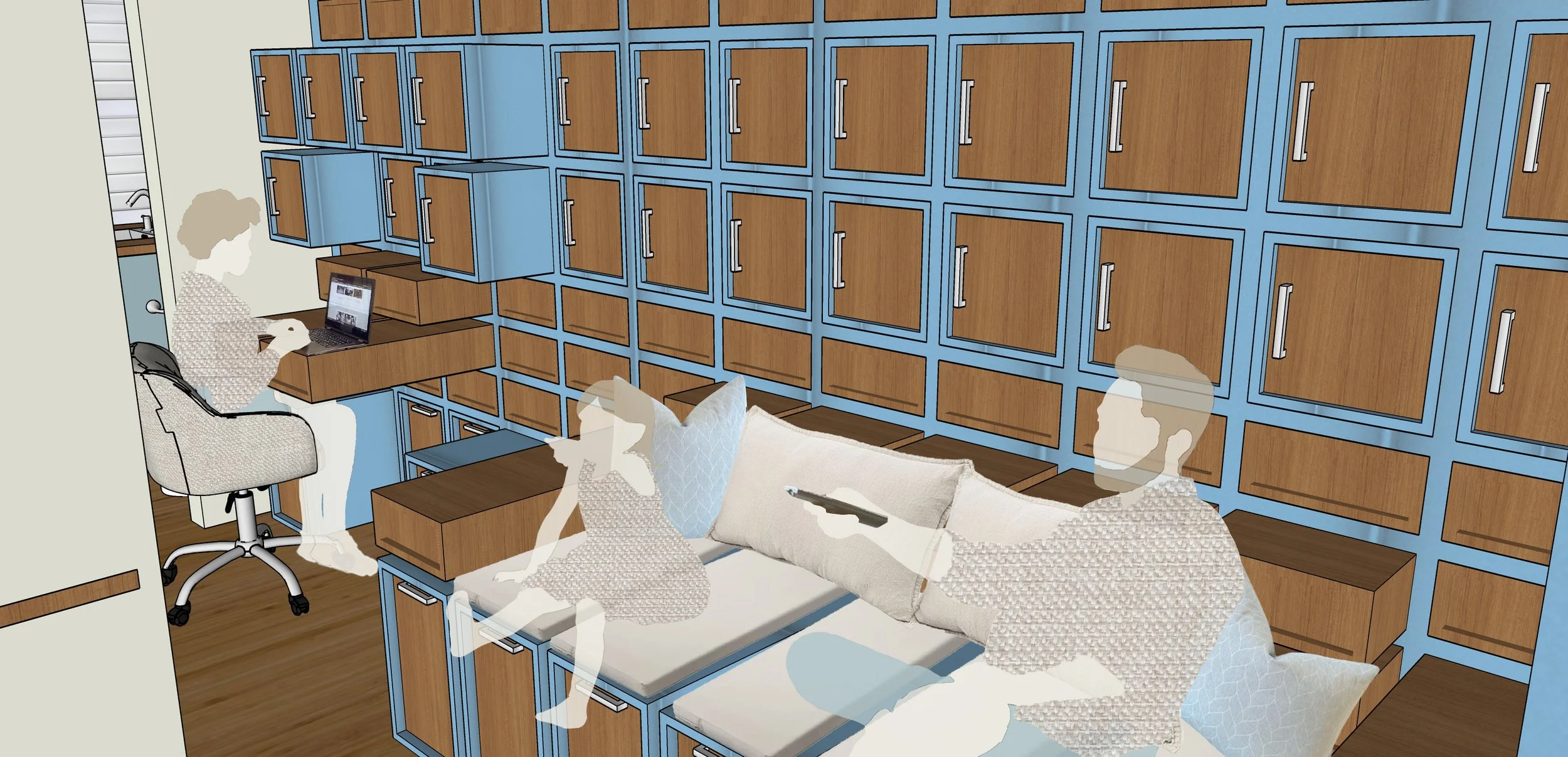
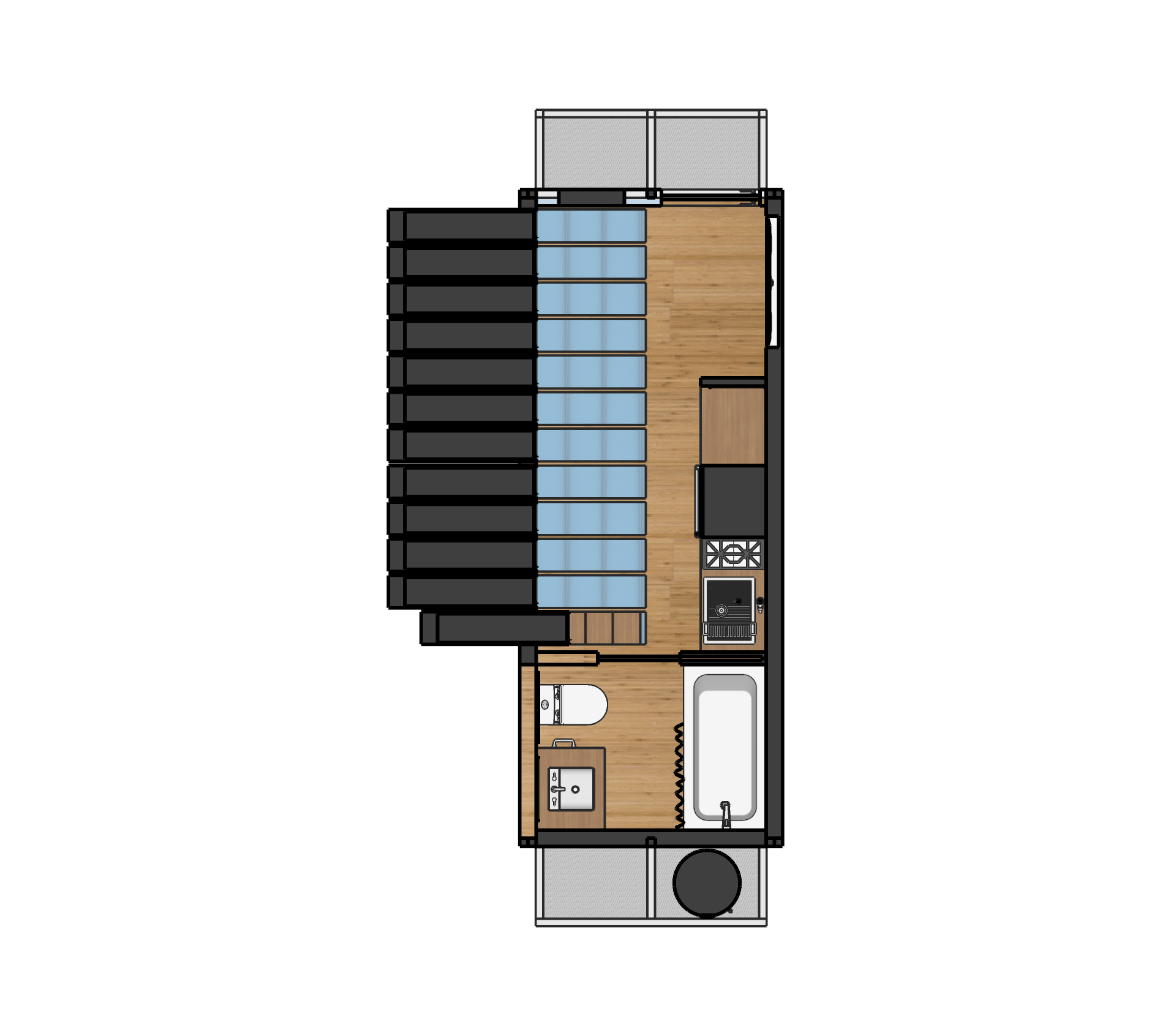
Early exploration focused on expandable systems that could adapt to shifting needs, using diagrams and physical models to test sliding and telescoping structures. Iterations moved toward orthogonal modular forms for efficiency, storage capacity, and constructibility. A grid-based system allowed components to transform into stairs, desks, closets, and seating, while maintaining a compact footprint.
PROCESS
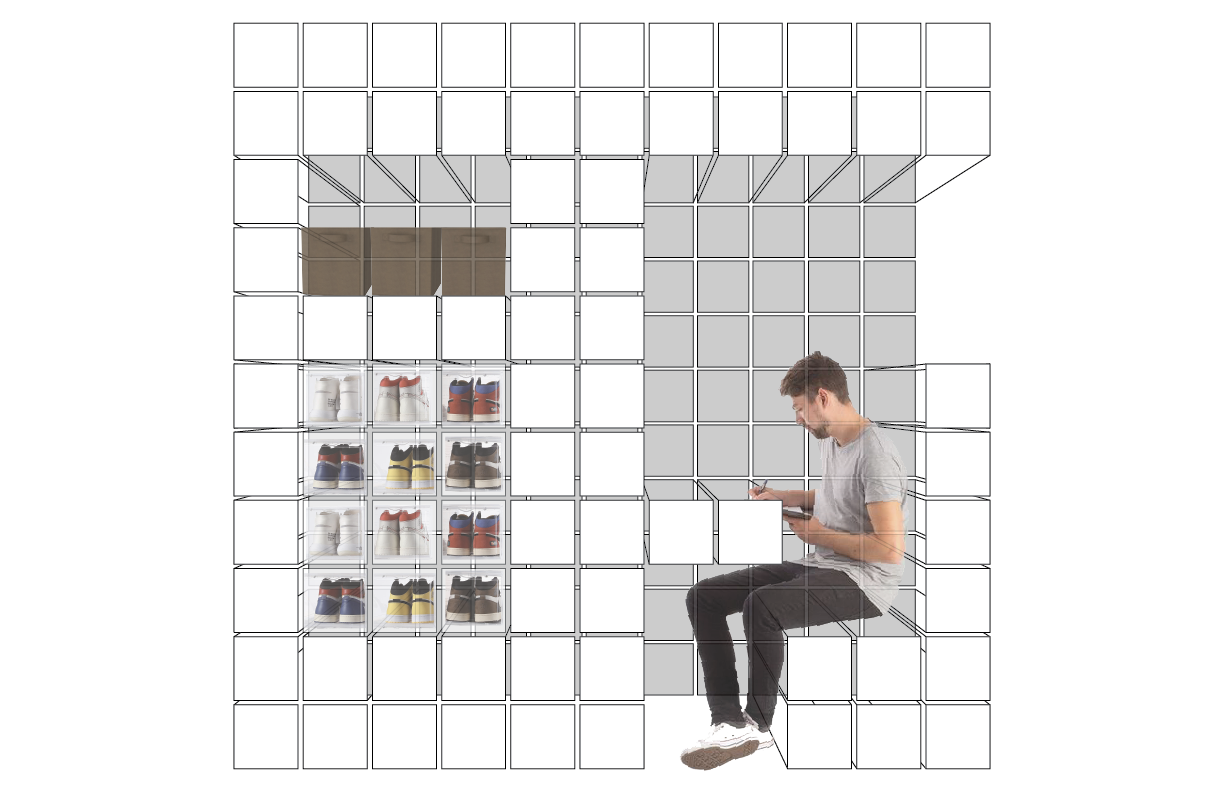
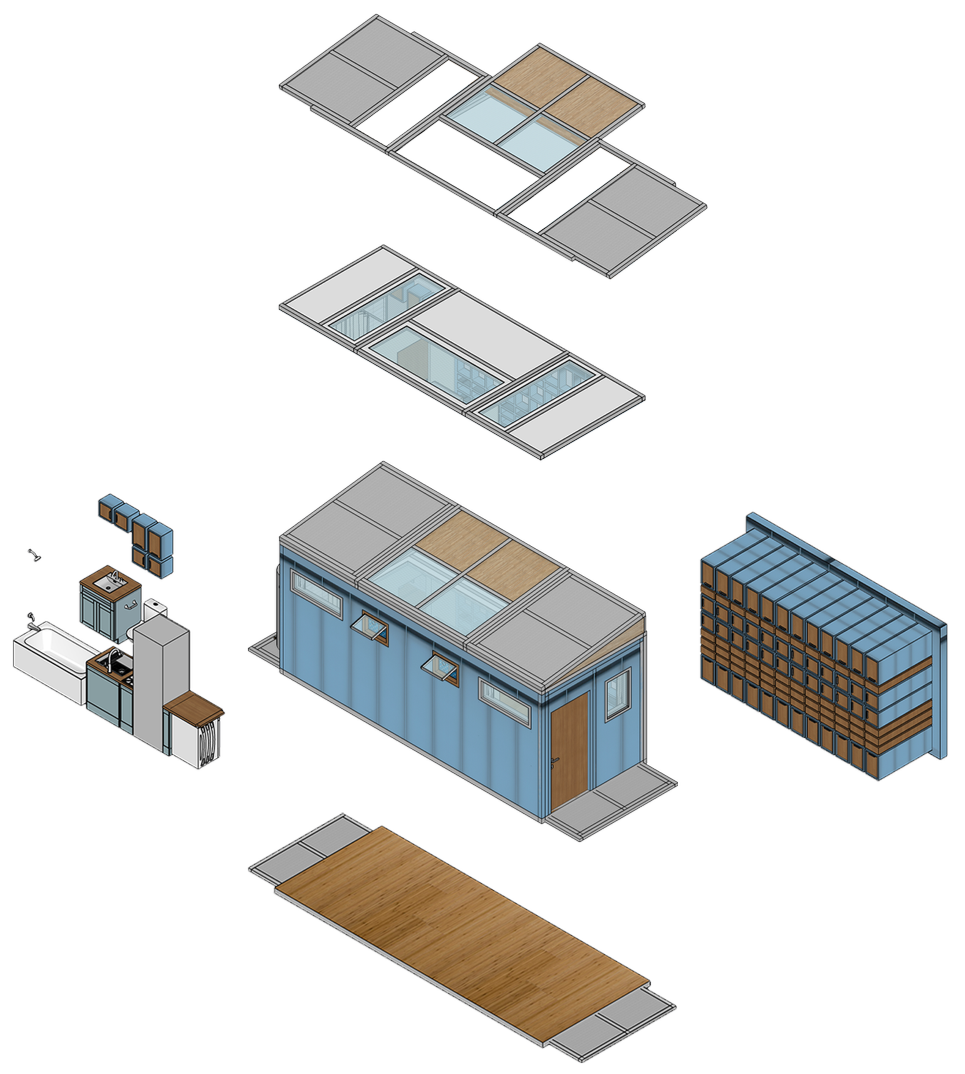
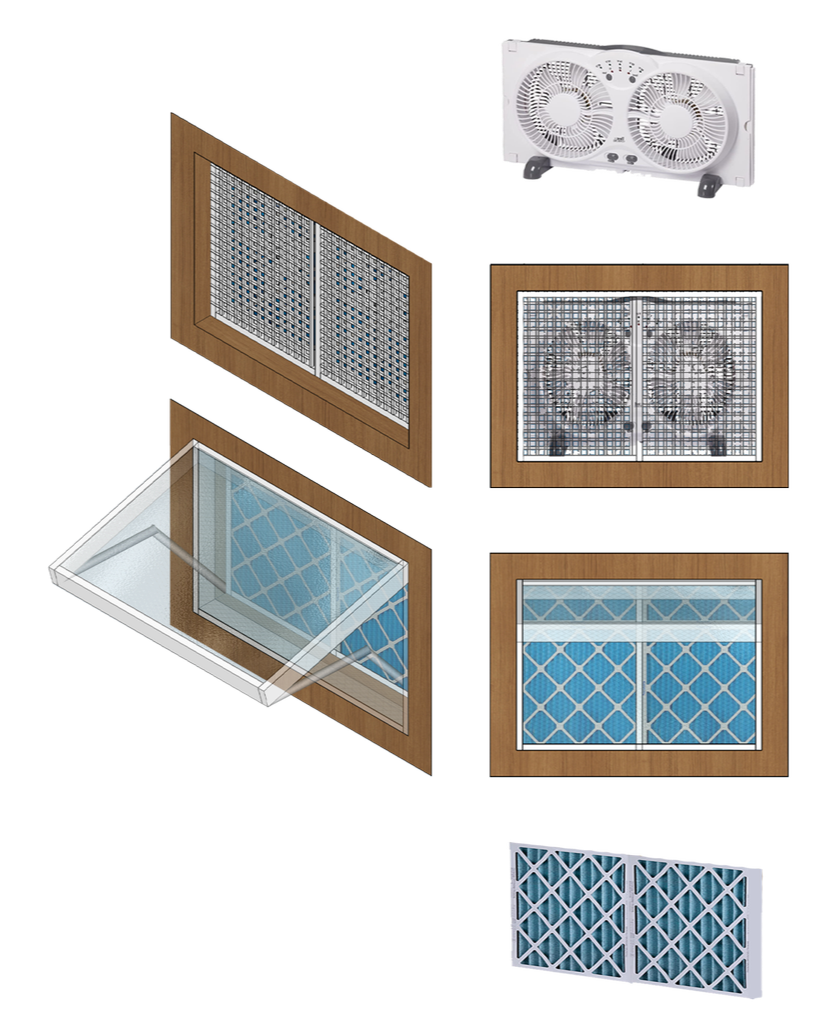
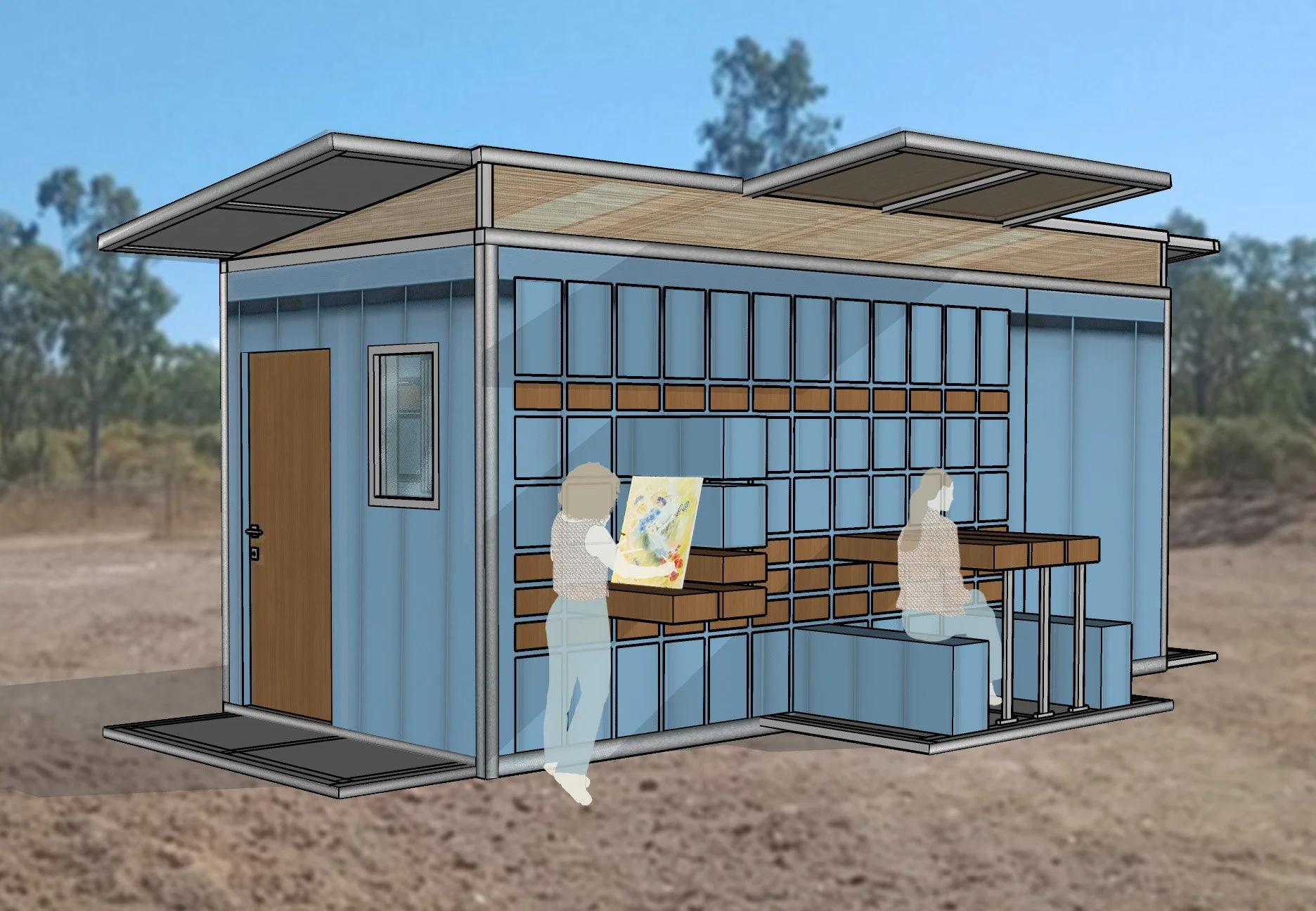
The final design introduces a reconfigurable wall system paired with strategic architectural updates, including relocated entry points, increased daylight, filtered ventilation, extendable platforms, and adjustable roof panels. Sliding exterior units activate the surrounding landscape, allowing residents to create work surfaces, seating, or shaded gathering areas.
PROPOSAL
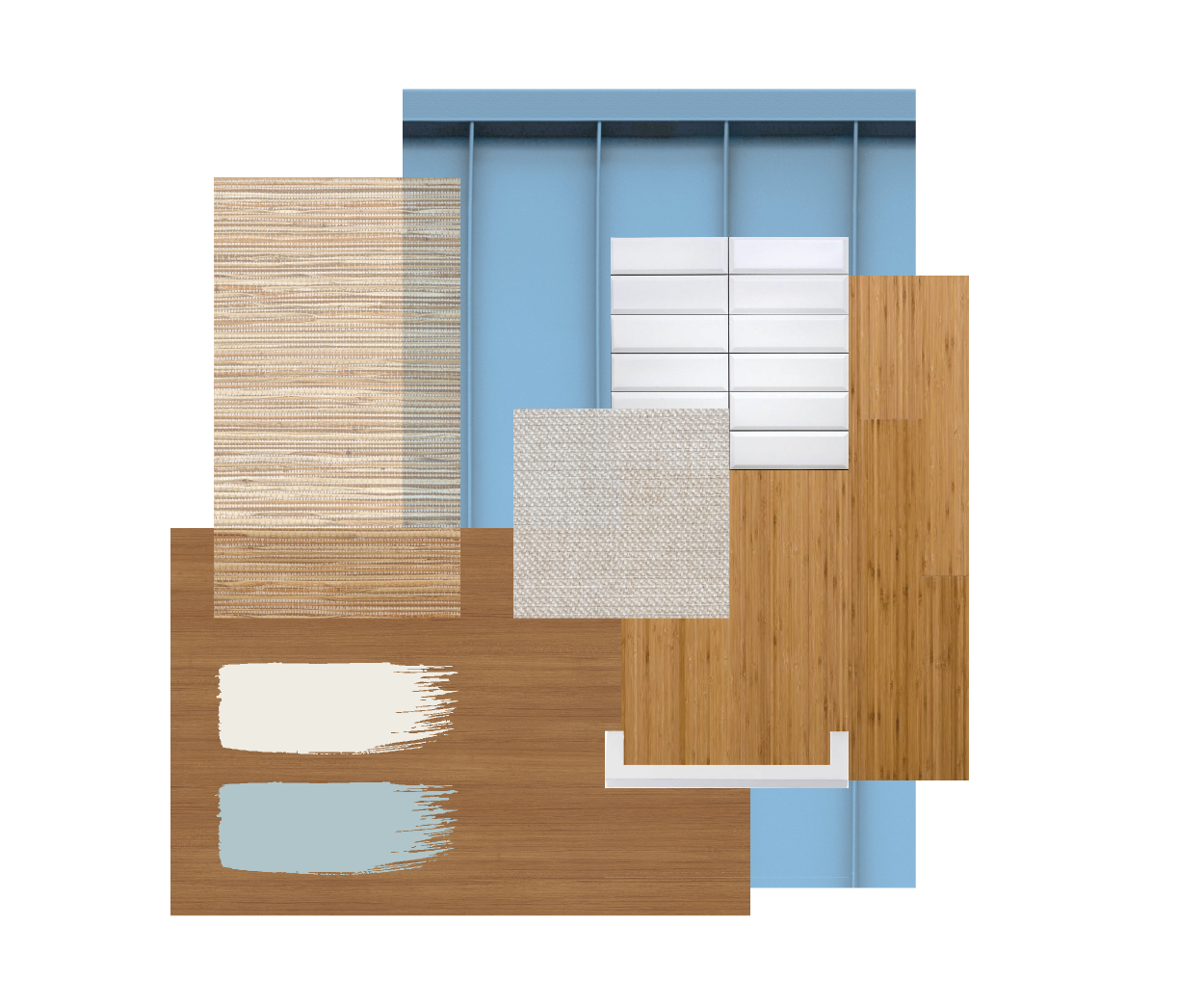
Material selections prioritize durability and climate response, using teak framing, bamboo flooring, and light blue metal cladding to deter insects and brighten the environment. The shelter expands and contracts as needed, offering adaptable storage, improved bathroom capacity, and multipurpose surfaces, transforming emergency housing into a more humane and resilient living environment.
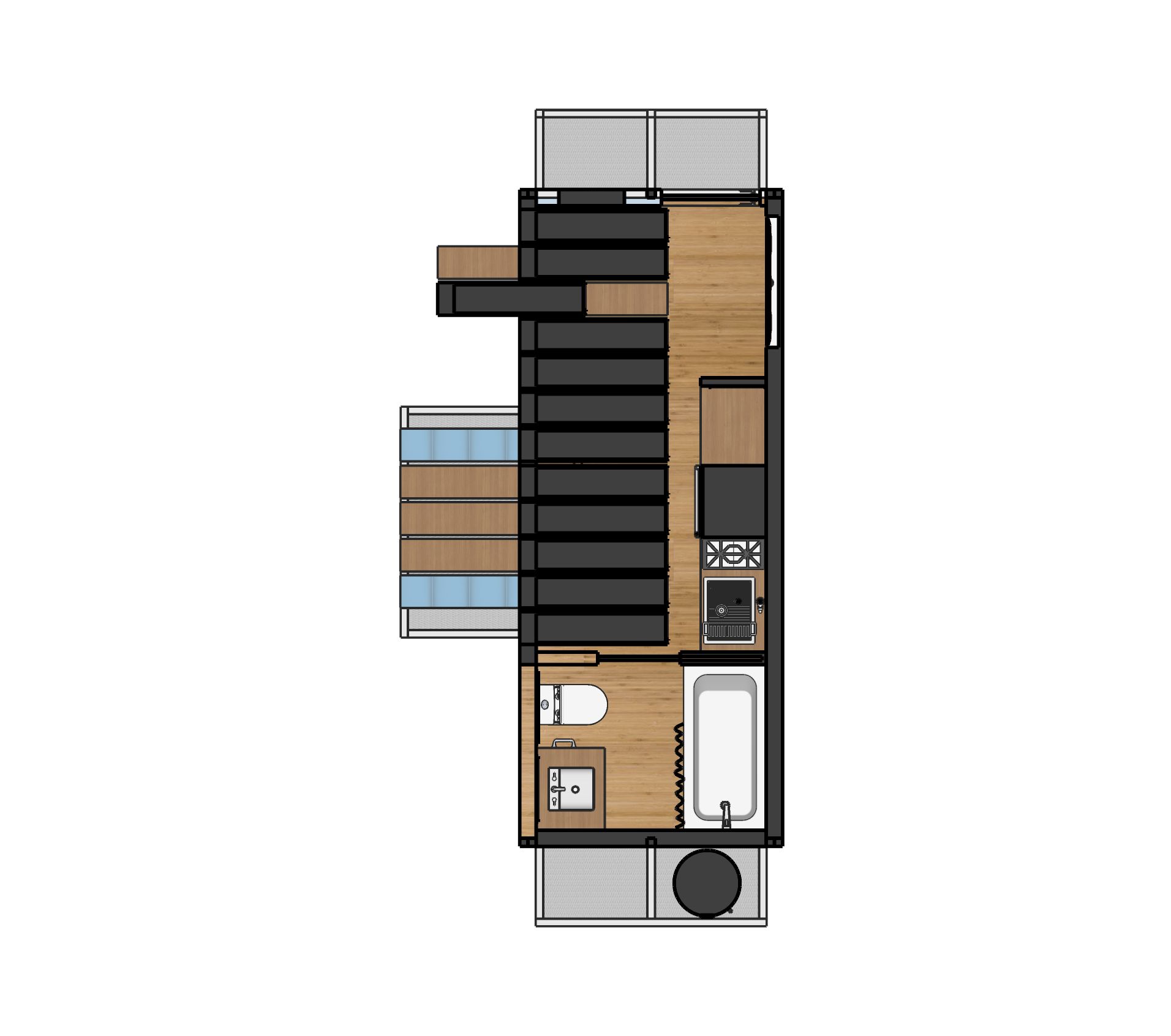
OUT
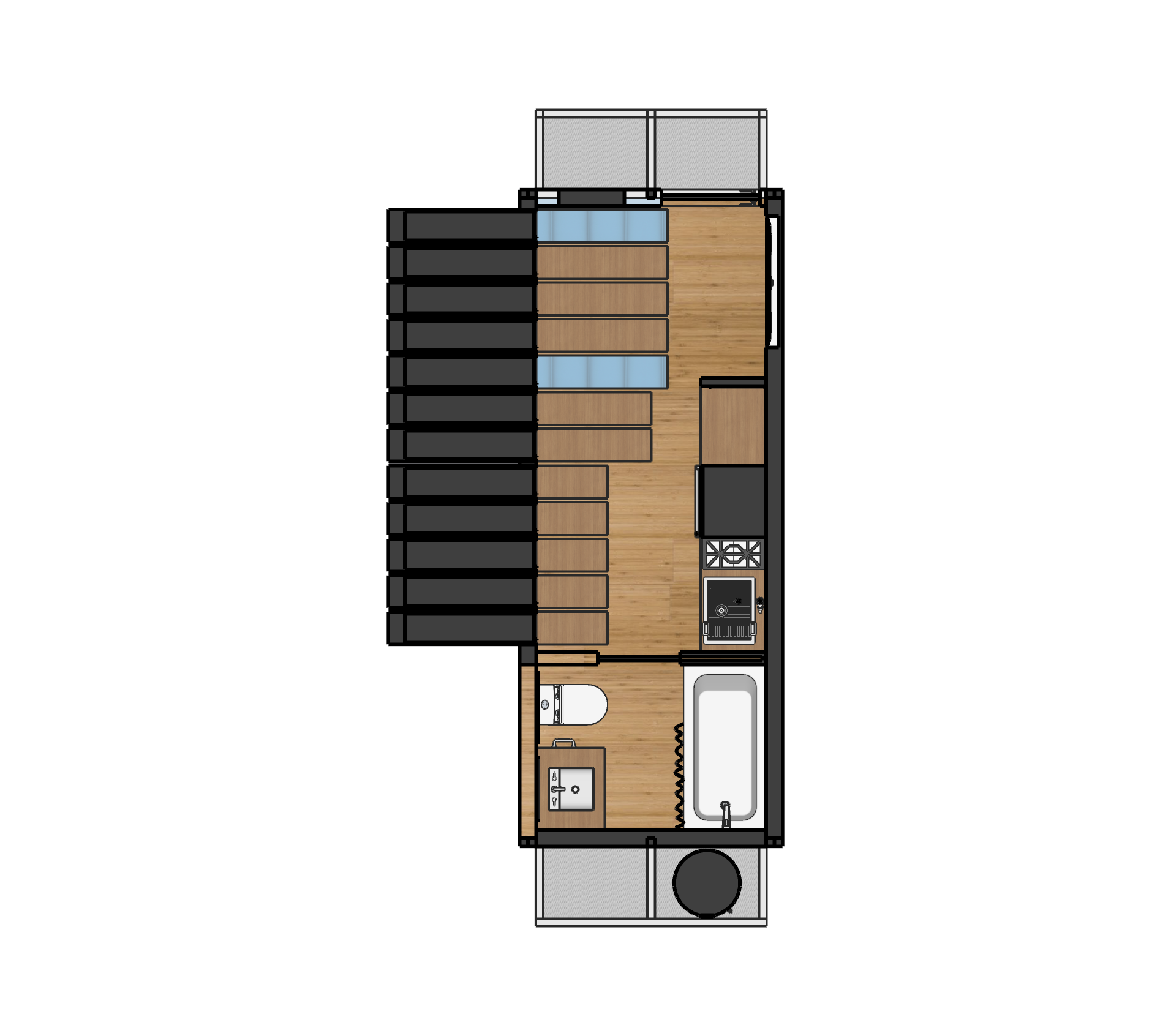
EAT
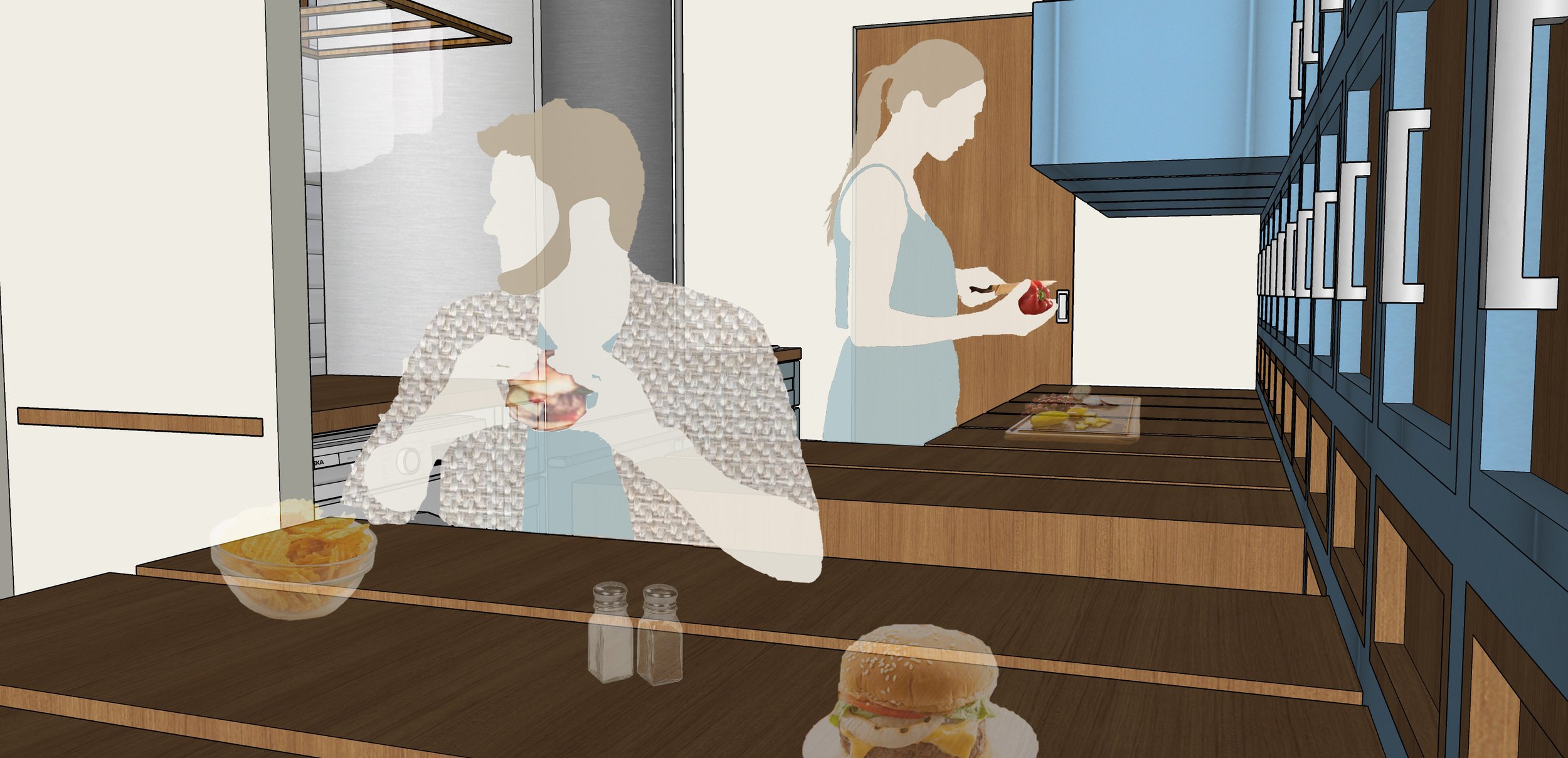
LIVE
REST